The sweater didn’t shrink. It didn’t fade. It just… stretched.
You lift it from the drying rack and something feels off. The shoulders sag. The neckline looks wider. The sleeves seem longer than yesterday. You replay the wash cycle in your head — same detergent, same temperature, same settings.
So what changed?
Very often, it’s not the washing machine ruining your clothes. It’s how you dry them.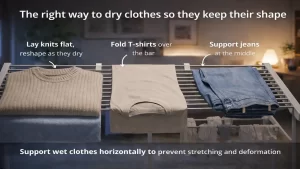
1 Drying Habit — Ruins Clothing Shape — Every Wash
The Quiet Drying Habit That Warps Your Wardrobe
Most people blame spinning, detergent, or fabric quality when clothes lose their shape. But the real damage often happens after the wash — during drying.
When clothes are wet, they’re heavier and more fragile. Fabric fibers swell with water, becoming weaker and more elastic. If you hang heavy garments vertically — by the shoulders, neckline, or waistband — gravity slowly pulls them out of shape.
It may not show after one wash.
But after 10, 20, or 30 cycles, the fabric “remembers” that stretched position.
That’s when:
V-necks deepen unexpectedly
Shoulder seams twist
Waistbands widen
Knees in jeans sag
Collars lose structure
Wet fabric + vertical hanging = gradual distortion.
It’s subtle. It’s slow. But it adds up.
Why Wet Clothes Stretch So Easily
When fibers are soaked, they are:
Heavier due to absorbed water
More elastic and vulnerable to traction
Easier to deform under their own weight
Hanging a soaked sweater from its shoulders forces the entire weight of the garment to pull downward at its weakest points. The same applies to T-shirts clipped at the collar or jeans hung from belt loops.
Over time, the stretched shape becomes permanent.
The Right Way to Dry Clothes to Keep Their Shape
The solution isn’t complicated. It’s about supporting the weight of wet fabric more evenly.
1. Lay Knits Flat
Place sweaters and cardigans flat on a drying rack or clean towel.
Gently reshape sleeves, hems, and shoulders with your hands before leaving them to dry.
2. Fold Tops Over a Bar
Instead of hanging T-shirts by the collar, fold them over a rack bar so the weight is shared between the front and back.
3. Support Heavy Pants at the Middle
Fold jeans lengthwise and hang them over a bar.
Avoid clipping only the waistband or belt loops.
4. Be Careful With Hangers
Wide, rounded hangers are acceptable for light garments.
Thin or wire hangers can stretch shoulders and leave marks.
5. Smooth Before Drying
Take a few seconds to align seams, straighten hems, and flatten fabric while it’s still damp. Clothes dry in the shape you leave them in.
Small Changes, Longer-Lasting Clothes
You don’t need new products.
You don’t need expensive laundry gadgets.
Just small adjustments:
Spread weight horizontally
Avoid fragile anchor points (necklines, straps, belt loops)
Skip the dryer for delicate knits
Give heavy garments proper support
Even reducing “bad hangs” by half can noticeably extend the life of your clothes.
Because every stretched neckline tells the story of one rushed evening.
And every sweater that still fits perfectly? That’s the result of a better drying habit.
Why This Matters More Than You Think
Clothes aren’t just fabric. They’re comfort, confidence, and money spent carefully. Wearing something misshapen — even slightly — can subtly affect how you feel throughout the day.
Changing how you dry laundry is one of the simplest ways to protect:
Fit
Structure
Fabric quality
Your wardrobe budget
You may not control how every garment is made. But you do control what happens after it leaves the washing machine.
And that makes all the difference.
Key Takeaways
| Key Point | What It Means | Benefit to You |
|---|---|---|
| Support clothes horizontally | Lay knits flat; fold garments over bars | Reduces stretching |
| Wet fibers are weaker | Water makes fabric heavier and elastic | Prevents long-term distortion |
| Avoid hanging from fragile areas | Skip collars, shoulders, belt loops | Maintains original fit |
| Small routine changes matter | Better placement on rack | Extends clothing lifespan |
FAQs
Why do my sweaters always look longer after washing?
They’re likely being hung vertically while very wet. The weight of absorbed water pulls the knit downward. Laying them flat and reshaping them while damp helps preserve length.
Is the tumble dryer safe for clothes?
For sturdy cotton items, low heat can be fine. For knits, elastane blends, and delicate fabrics, dryers can weaken fibers and distort shape — even on gentle settings.
Can I dry T-shirts on hangers?
Yes, if they’re lightweight and you use wide, rounded hangers. Avoid thin or wire hangers, which can stretch shoulders over time.
What’s the best way to dry jeans?
Fold them in half lengthwise and hang them over a bar so the weight is distributed evenly. Avoid hanging only from the waistband or belt loops.
Do I really need to reshape clothes while wet?
Yes — gently smoothing seams and aligning hems while damp helps garments dry closer to their original cut. It takes seconds but prevents long-term warping.