Many skincare lovers enjoy using natural ingredients, especially oils already found in the kitchen. One popular example is Olive Oil, which has long been associated with beauty traditions dating back to Cleopatra.
While olive oil is widely praised for its health benefits in food, experts say applying it directly to your skin may not always be the best skincare choice. Dermatologists and skincare specialists explain when it can help—and when it may cause problems.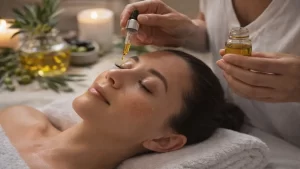
1 Common Kitchen Ingredient — Can Olive Oil Really Benefit Your Skin — Experts Explain
Potential Benefits of Olive Oil for Skin
Olive oil contains several nutrients that can benefit the skin when used carefully.
1. Deep Moisturizing Effects
Olive oil is rich in monounsaturated fatty acids and antioxidants, making it a strong natural moisturizer.
According to dermatologist Neda Mehr, olive oil can help protect the skin’s natural barrier, especially during colder months when indoor heating dries out the skin.
The skin barrier helps keep moisture locked in. When the weather becomes cold or dry, that barrier can weaken. Applying a small amount of olive oil over damp skin may help prevent moisture loss.
2. Supports Wound Healing
Olive oil contains compounds called triterpenes, which may help stimulate collagen production and support wound repair.
Collagen plays a key role in skin healing, helping damaged tissue recover more quickly.
3. Anti-Aging Properties
Because olive oil contains healthy fats and vitamins, it may help improve skin elasticity and reduce the appearance of fine lines.
Some studies suggest its nutrients can encourage collagen production, making skin appear smoother and more hydrated over time.
Possible Side Effects of Using Olive Oil on Skin
Despite its benefits, olive oil is not suitable for everyone.
1. May Clog Pores and Cause Acne
For people with acne-prone or oily skin, olive oil may create problems.
Dr. Mehr explains that olive oil can block pores, which may lead to breakouts or worsen existing acne.
2. Increased Risk of Sun Damage
Experts also warn against using olive oil during the daytime before sun exposure.
Without proper sun protection such as clothing or sunscreen, oil on the skin may increase the risk of sunburn and irritation.
Should You Use Olive Oil in Your Skincare Routine?
Opinions differ among skincare professionals.
Esthetician Anna Babayan believes olive oil is generally not ideal for facial skincare because the skin cannot easily absorb its large molecules. Instead, it often sits on top of the skin as a barrier.
However, Dr. Mehr notes that olive oil may still help people with conditions like Eczema, where the skin barrier is weakened and moisture protection is needed.
Experts also caution that olive oil should not be relied upon to treat dark spots or hyperpigmentation, as its antioxidant properties are not strong enough for that purpose.
How to Apply Olive Oil Safely
If you decide to use olive oil on your skin, dermatologists recommend a careful approach.
Best practices include:
Apply it within three minutes after showering
Use it only at night
Do not apply it to a completely dry face
Add a few drops over your regular moisturizer
Avoid acne-prone areas
Choose organic extra-virgin olive oil
It may be better suited for hands, legs, or very dry body areas rather than the face.
Alternative Oils Dermatologists Recommend
If you enjoy facial oils, several lighter options may work better for most skin types.
Jojoba Oil
Ken Howe recommends Jojoba Oil because its structure closely resembles the skin’s natural oil (sebum).
It absorbs quickly and may help balance oil production.
Tea Tree Oil
Dermatologist Deanne Mraz Robinson suggests Tea Tree Oil for acne-prone skin.
Its antibacterial properties can help reduce active breakouts and prevent new ones.
Maracuja Oil
Maracuja Oil contains essential fatty acids and vitamin C, which may help improve skin brightness and elasticity.
Conclusion
Olive oil can provide strong moisturizing benefits thanks to its healthy fats and antioxidants. However, dermatologists warn that it is not suitable for every skin type—especially those prone to acne or oiliness.
For people with extremely dry or damaged skin, small amounts applied correctly may help support the skin barrier. But for daily facial skincare, lighter oils formulated specifically for the skin may be a safer and more effective option.
As with any skincare ingredient, understanding your skin type and using products appropriately is key to achieving healthy results.
Frequently Asked Questions (FAQs)
1. Is olive oil safe to use on the face every day?
Not necessarily. Dermatologists warn that daily facial use may clog pores and trigger acne in many people.
2. Can olive oil help reduce wrinkles?
Olive oil contains antioxidants and healthy fats that may improve skin hydration and elasticity, but it is not a powerful anti-aging treatment.
3. Who should avoid using olive oil on their skin?
People with oily or acne-prone skin should generally avoid applying olive oil directly to the face.
4. When is the best time to apply olive oil to the skin?
Experts recommend applying a few drops at night after showering, ideally over a moisturizer.
5. Are there better oils for skincare than olive oil?
Yes. Oils such as jojoba oil, tea tree oil, and maracuja oil are often recommended because they absorb faster and are less likely to clog pores.